Naroda, Ahmedabad, Gujarat
| Business Type | Manufacturer, Exporter, Supplier |
| Material | Steel |
| Application | Industrial Use |
| Country of Origin | India |
| Click to view more | |
Product Details
Heat Exchanger Tube Sheet Description
Overview:
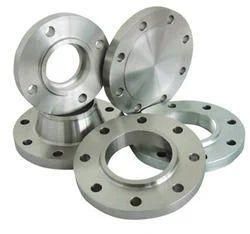
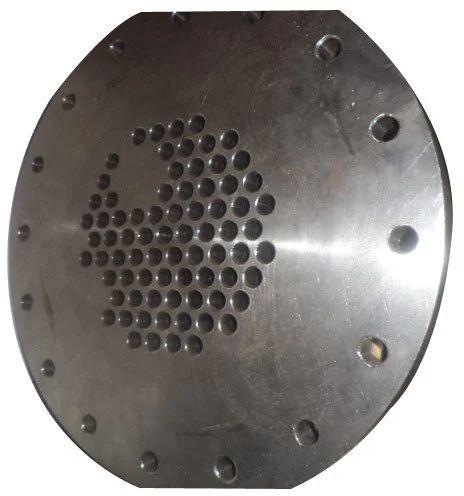
A Tube Sheet is a critical structural and pressure-retaining component in shell and tube heat exchangers, boilers, pressure vessels, and condensers. It serves a dual purpose: supporting the thousands of individual tubes that form the heat-transfer bundle and acting as a pressure-tight seal to prevent cross-contamination between the fluid inside the tubes and the fluid flowing around the shell.
Key Functions & Design Elements:
1. Tube Support: Holds the ends of heat exchanger tubes in a uniform pattern (triangular or square pitch) to optimize fluid flow and thermal transfer.
2. Fluid Isolation: Creates a tight physical seal separating tube-side fluid (inside the tubes) from shell-side fluid (outside the tubes).
3. Pressure Containment: Must withstand differential pressure between the shell side and tube side without flexing or degrading.
Tube-to-Tubesheet Joint Methods:
- Expanded Joint: Tubes are mechanically roller-expanded into grooved holes in the tube sheet to form a tight friction fit.
- Welded Joint: Tubes are seal-welded or strength-welded directly to the front face of the tube sheet for high-pressure or hazardous chemical service.
- Expanded & Welded Joint: Combines both mechanical expansion and welding for maximum strength and leak prevention.
Common Types & Configurations:
- Fixed Tube Sheet: Permanently welded or bolted to the shell at both ends; simple and economical, best for clean fluids with minimal thermal expansion differential.
- Floating Tube Sheet: One tube sheet remains fixed while the other is free to move axially inside the shell, accommodating thermal expansion/contraction.
- U-Tube Tube Sheet: A single tube sheet is used; bent U-tubes handle thermal expansion naturally.
- Double Tube Sheet: Features two adjacent tube sheets with a small air gap between them; used when zero cross-contamination of fluids is strictly required (e.g., pharmaceutical, nuclear).
Manufacturing Standards & Materials:
- Design Standards: ASME Section VIII Div 1 (Appendix 14/TEMA), TEMA (Tubular Exchanger Manufacturers Association), EN 13445.
- Common Materials: Carbon Steel (ASTM A105 / SA516 Gr 70), Stainless Steel (304L, 316L, 321), Duplex Stainless Steel, Titanium, Brass/Bronze, and Clad Steels (e.g., Carbon steel base with explosion-bonded Stainless/Titanium layer).
Raise your Query
Hi! Simply click below and type your query.
Our experts will reply you very soon.