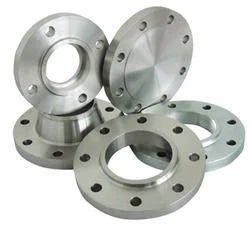
Naroda, Ahmedabad, Gujarat
- GST NO. : 24AHNPC7685H1Z1


| Business Type | Manufacturer, Exporter, Supplier |
| Material | Stainless Steel |
| Shape | Round |
| Finishing | Polished |
| Click to view more | |
Product Details
Packaging
Carton Box
Pressure
High Pressure
Country of Origin
India
Flange Type
Plain
Lap Joint Flange Description
Overview:
A Lap Joint Flange is a specialized two-piece flange assembly used in piping systems where frequent dismantling for inspection, cleaning, or maintenance is required. It consists of a loose backing flange that slides over the pipe and a separate short pipe section with a flared shoulder called a "stub end." The stub end is butt-welded directly to the pipe, while the backing flange remains free to rotate around the stub end to align bolt holes easily.
Key Components & Working Principle:
1. Stub End: A short pipe fitting welded directly to the line. Its flared face acts as the actual flange sealing face where the gasket rests.
2. Backing Flange: A ring flange with a curved radius at the center bore that rests against the back of the stub end shoulder. It exerts clamping pressure when bolted.
Core Advantages:
- Free Rotation: The flange ring can spin 360 degrees around the stub end, making bolt hole alignment effortless during installation.
- Cost Efficiency: For stainless steel or exotic alloy piping systems, only the stub end needs to be made of expensive corrosion-resistant material; the outer backing flange can be cheaper carbon steel.
- Non-Welded Ring: The backing flange is not welded to the pipe, allowing quick removal for cleaning or replacement without cutting welds.
Common Specifications:
- Standards: ASME B16.5, ASME B16.47, EN 1092-1, DIN 2642.
- Pressure Ratings: Standard ANSI Class 150 and Class 300 (rarely used in high-pressure or high-stress environments).
- Facing Type: Plain flat face on the stub end (the backing flange itself has a machined internal radius to match the stub end shoulder).
Primary Applications:
- Systems requiring frequent line disassembly or cleaning (e.g., food processing, paper pulp, pharmaceutical lines).
- Low-pressure, non-critical process piping systems.
- High-cost material systems (e.g., Titanium, Nickel Alloys, Stainless Steel) to reduce overall material expense.
Looking for "lap-joint Flanges" ?
Piece
Explore More Products


